
 A Vision for Cemeteries in Perpetuity
Sal Dugan
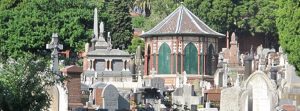
Anyone interested in community history will have spent time exploring the local cemetery, perhaps discovering headstones for people of historic importance or simply ones who may share their own names. Inevitably their visit will be saddened by the rate of infant and childhood mortality from 150 years or so ago.
Historically, Victorians have paid for the right to be buried which means that cemeteries are obligated to honour that right in perpetuity. However, this means visitors may find the cemetery somewhat bleak. So many of our cemeteries in perpetuity are left bereft of care, the more so when they have outlived not only their occupants, but also their occupants’ descendants.
When initially planned, these cemeteries were sited on the outskirts of towns or suburbs, but as development encroached over the decades many now lie in the midst of large housing estates and associated community essentials such as shops, businesses, schools. Many are now effectively derelict, no longer places to visit loved ones, but uncared for spaces of desolation creating heat islands in the midst of lively communities.
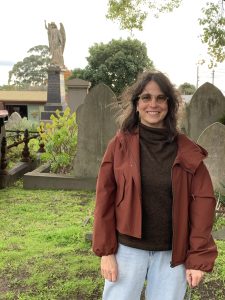 Architect and landscape architect Dr Isabel Lasala recently received her PhD on the premise that cemeteries in perpetuity are among the most consistently overlooked urban spaces. She remarks that cemeteries have long been central to our relationship with death and are traditionally viewed as sacred, untouchable and static. But she asks ‘What if we reimagine cemeteries as dynamic, hybrid spaces shaped by time, memory and ecological processes?’
Instead of being desolate acreages of decay, cemeteries in perpetuity could become vibrant community spaces, with walkways creating shortcuts connecting one part of a suburb to another. Pathways could be cracked to allow indigenous planting to encourage birds, bees and insects to thrive in an otherwise barren environment These would also allow water to penetrate, which in turn would support stormwater management. We have all witnessed similar transformation of our nature strips, many of which are no longer planted with unproductive grass. Instead, they have been converted into biodiverse natural landscapes carefully planned indigenous plantings.
Dr Lasala advocates cemeteries being transformed from abandoned or forgotten spaces to ones of community enjoyment. Places where we can all enjoy a walk and reflect on our departed loved ones who may be interred interstate or overseas, or we can spend time admiring the structural architecture of the plots, from the simplest of headstones to the grandiose burial sites that are found in many cemeteries.
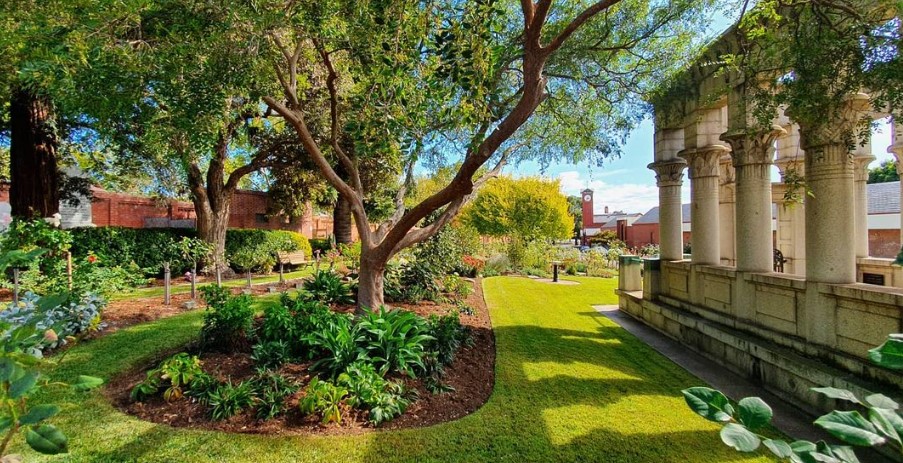
I met Dr Lasala at the Kew (Boroondara Memorial) Cemetery, a place of great calm, stunning gardens, architectural and sculptural splendour. Open daily for all to enjoy. How fitting was that!
 Rather than viewing their gradual decay as failure, we could explore design-driven alternatives that merge the contrasting forces of grief and play transforming decay into a catalyst for civic engagement.